
This entire article is free to read.
The audio narration is available exclusively to paid subscribers.
People Do Not Know What Eugenics Is
We live in a fundamentally eugenic society. We should be grateful for this.
Sperm donors may not be HIV positive. Abortion restrictions carve out exceptions for incest. Marriage between fathers and daughters is illegal. In some states, cousin marriage is permitted only where one partner is sterile or past childbearing age. (For more here, see my Substack, What’s Wrong With Fucking Your First Cousin? and my conversation with evolutionary biologist Colin Wright, Is the US Taking in Too Many Inbreds?)
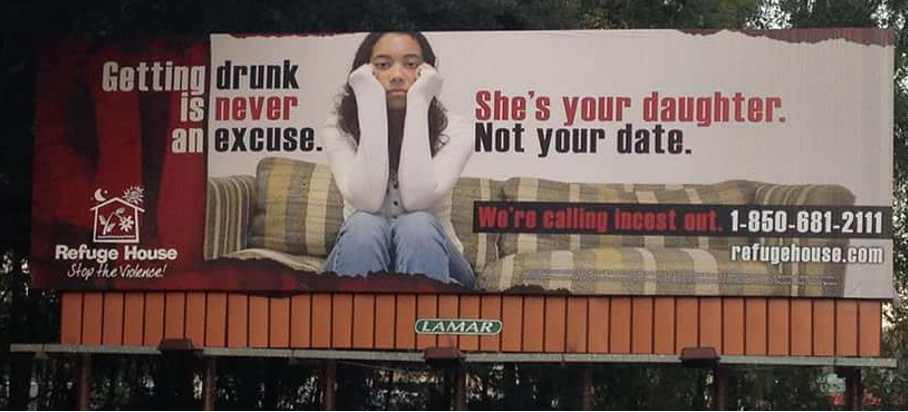
Eugenics is a scary word. It conjures images of Nazi atrocities or the doctors who forcibly sterilized Black people across the American South. Those were eugenicists. But eugenics is something far broader than that, too. Britannica defines eugenics as “the selection of desirable, heritable characteristics in order to improve future generations, typically in reference to humans.”
Wanting babies not to be born with HIV is eugenic. Opposing procreative incest is eugenic.
Eugenics is not wrong in and of itself; it is wrong (as near all things are) when it is forced or coerced. People of all political orientations miss this distinction. This is why even as factions of the left criticize eugenics as “fascist” or “anti-revolutionary,” there is no political faction that encourages HIV-positive men to father children.
“The More Dysgenic The Better”
Dysgenic (adj.)
[dis-jen-ik]/ dɪsˈdʒɛn ɪk /
: pertaining to or causing degeneration in the type of offspring produced
: of, relating to, or contributing to a degeneration or deterioration in the fitness and quality of a race or strain
: tending to promote survival of or reproduction by less well-adapted individuals (such as the weak or diseased) especially at the expense of well-adapted individuals (such as the strong or healthy)
: biologically defective or deficient
You may remember the recent viral clip of a masked speaker at the Socialism 2026 conference speaking about “Health Fascism, Body Politics, and the Anti-State State.”
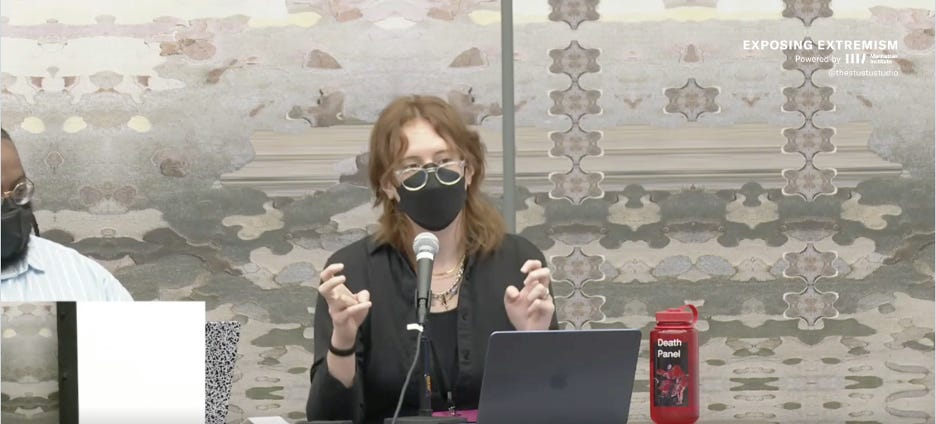
This masked speaker was disability activist Beatrice Adler-Bolton. In her own words: “The point is not to beat the fascists at their own game. It is not to lay a better claim on their own territory by being fitter, more eugenic. In fact, the more dysgenic the better, I think. Revolution is not a competition between optimized and properly prepared bodies” [italics mine].
If Adler-Bolton actually believed this, she would be encouraging HIV positive men to father children. She does not. One could argue that this is because she is unprincipled, but I think it far more likely that she simply does not actually know what eugenics is and has never sincerely thought about its moral implications. As someone who taught for over 20 years, I can say that this is not entirely her fault.
The academy has trained a generation to deploy epistemologies which stop at a label. Specifically, students are trained to start with an idea and to demonstrate that that idea falls under a certain label. Once you can declare a thing “colonial,” or “eugenic,” or whichever term your field uses, your thinking is completed. The thing has been labelled, the labelled thing is axiomatically bad, and now one may move on.
But naming is where thinking should begin, not end. The harder, more nuanced, more genuinely useful questions are almost never asked: When, and why, and to what extent is said label actually bad? What would change your mind about the label being bad (or good)? What are the best counterexamples to your claim that it’s bad? What makes those good counterexamples?
We Need A Real Debate About Eugenics
Our society is about to become far more eugenic.
This is the breaking dawn of technologies that will force us to make conscious decisions about what type of people we bring into the world. Embryo screening already lets parents choose sex, and polygenic scores now add height and (fuzzy, for now) intelligence. The accuracy is poor today. It will not remain poor.
The simple axiom of “Eugenics Bad” (which is the extent most people have thought about this issue) is woefully insufficient to guide us through the moral and societal minefield that is the imminently incoming genetic revolution. We desperately need a cultural, moral, and legal conversation in which we ask questions that will determine the future shape of our societies: What traits should be legal to select for? Is it morally permissible to not select? Will there be collective action problems of too many people selecting for too many, or too few of certain traits? Should some traits not be selected? Should taxpayers subsidize genetic enhancements?
Finally, one central tension often ignored in discussions about eugenics is that between avoiding eugenics and expanding women’s reproductive freedom. As long as women are the ones who gestate children, the choices this technology creates will fall to them: Whether to have a son or a daughter, a child with a given condition or without it, a child selected for a trait or left to chance. There is a real and underexamined tension between the expansion of women’s reproductive freedom and the desire to constrain eugenics. Some limits seem obvious: Selecting for a serious disability strikes people as something the law should obviously forbid. But “obvious” is doing heavy work in that sentence, and there are people, for instance in the deaf community, for whom it is not obvious. (See “Deaf Culture,” here, here, and here.)
These are precisely the conversations we need to have now, before a generation of children emerge enhanced, and perhaps even, as Adler-Bolton argued for, dysenhanced.
Peter
This article is entirely free to read. Free subscribers may see a paywall below because Substack requires it to restrict access to the audio narration.
There is no additional content behind the paywall.